




Few things affect how confident you feel about your smile quite like its colour. Yellowing usually happens so slowly that you do not notice it day to day, and then one photograph makes it obvious. The good news is that yellow teeth almost always have an identifiable cause, and once you know which cause applies to you, the right fix becomes far easier to choose.
This guide from the team at Footscray Dental Studio works through the ten most common reasons teeth turn yellow, explains what is actually happening inside the tooth in each case, and sets out the practical steps that help. Some of those steps are simple changes at home. Others need professional involvement. Either way, suitability and results always depend on an individual assessment, so treat this as a map rather than a prescription.
What Are Yellow Teeth, Really?
Yellowing describes an abnormal change to the natural white appearance of enamel, leaving teeth looking yellowish, dull or stained. The word "yellow" is a little misleading, though, because discoloured teeth are not always yellow at all. Depending on the cause they can look brown, grey, black or any shade in between, and a single mouth can contain several of these at once.
The process is gradual. It may affect every tooth in the mouth, or it may affect some teeth lightly and others severely, depending on how long the cause has been at work and what exactly is driving it. Discolouration is also frequently accompanied by bad breath, which is part of why it draws attention: the two together make an underlying oral health problem much harder to ignore. If bad breath is part of your picture, it is worth understanding how plaque and neglected cleaning create both problems at once, which we cover in our article on poor oral hygiene.
The Reason Behind Teeth Yellowing
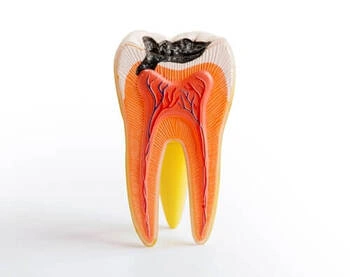
To understand why teeth yellow, it helps to know that a tooth is built in layers. The outer layer is enamel, which is hard, translucent and naturally whitish. Beneath it sits dentine, which is softer, more porous and naturally yellow.
When the outer enamel layer weakens or becomes stained, whether through bacterial attack, acid exposure or simple wear, the inner dentine becomes more visible through it. That is the whole mechanism in a sentence. Sometimes the stain sits on the surface of the enamel. Sometimes the enamel itself thins and lets the yellow beneath show through. Often it is both at once, which is why two people with identical habits can end up with very different looking teeth.
The Two Common Types of Tooth Discolouration
Extrinsic stains
Extrinsic stains live on the outer surface of the tooth. They are caused by the things that pass over the enamel every day: sugary foods, coffee, tea, red wine and tobacco. Poor oral hygiene is the usual culprit that lets them accumulate, since plaque provides a rough surface for pigment to cling to.
The main causes of extrinsic staining are food and beverages, tobacco use, poor oral hygiene, certain medications and mouthrinses, and environmental factors such as high mineral content in water. The encouraging part is that surface stains respond well to cleaning. A thorough professional clean removes a great deal of what brushing at home cannot.
Intrinsic stains
Intrinsic stains develop inside the tooth, within the dentine itself. They are caused by certain medications, excessive fluoride intake, trauma to the tooth, or the natural process of ageing.
These stains are considerably more difficult to shift than surface staining. They cannot be removed by regular brushing or a standard clean, because the pigment is not on the outside of the tooth at all. Addressing intrinsic discolouration generally requires professional whitening or, in some cases, a restorative approach. The usual causes are excessive fluoride intake during childhood (fluorosis), certain medications, tooth trauma or injury, some dental restorations, genetic conditions and ageing.
10 Common Causes of Yellow Coloured Teeth
1. Excessive use of staining beverages
Tea, coffee and red wine all contain tannins, and tannins are very good at sticking to enamel. Within tannins sit chromogens, strongly pigmented compounds that bind to the tooth surface and leave visible stains behind. A daily flat white habit adds up over years in a way that a single cup never suggests.
Staining rarely travels alone. According to the Australian Institute of Health and Welfare, around one in four Australians experience oral health problems of the kind that leave teeth looking yellow and dull.
What helps:
- Rinse your mouth with water after tea, coffee or wine so tannins have less opportunity to settle on the enamel.
- Use a straw for iced coffee and other cold staining drinks to minimise direct contact with the front teeth.
- Reduce the overall number of sugary drinks you have through the day, since frequency matters more than volume.
2. Smoking and tobacco use
Smoking and tobacco use are among the leading causes of yellow and stained teeth in Australia. Tobacco contains tar and nicotine, both of which cling tenaciously to enamel and strip away its natural white hue, often leaving a distinctive brownish tint along the gum line and between the teeth.
There is a second mechanism at work too. Smoking causes dryness in the mouth, and a dry mouth produces less saliva. Since saliva is what naturally washes away pigments and the particles that feed plaque, less of it means food debris accumulates instead of being cleared, which in turn triggers more staining and more plaque. The two effects compound one another.
What helps:
- Stopping smoking completely is the single most effective change, and reducing use meaningfully helps if quitting is not achievable right now. Your GP can advise on support available.
- Brush twice daily to clear the tar and nicotine residue before it sets.
- Floss regularly so plaque does not build up between the teeth, where stains settle most stubbornly.
3. Poor oral hygiene
If we had to name one cause above the rest, this is it. Skipping the night-time brush and flossing occasionally rather than daily allows plaque to accumulate, and food particles build up alongside it. Over time that soft plaque hardens into calculus, which carries a distinctive yellow or brown tint and cannot be brushed away at home. At that point only a professional clean will remove it.
What helps:
- Rinse your mouth with water after meals and snacks alike, so food pigments and particles are washed away rather than left sitting on the teeth.
- Use a mouthwash to help control bad breath and reduce bacteria, alongside brushing rather than instead of it.
- Schedule a dental appointment roughly every six months. Our check-up and clean appointments remove hardened plaque and surface staining, and they are available to patients across Footscray, Seddon and Yarraville with online booking.
4. Genetics
The natural hue of your teeth is partly hereditary. Enamel thickness, enamel translucency and the underlying shade of your dentine are all governed by inherited traits, which means a tendency towards yellower teeth genuinely can pass from parents to children. If yellowing runs in your family, you may notice it despite an oral hygiene routine that is beyond reproach, and that can be quietly frustrating.
What helps:
Professional teeth whitening, carried out under the supervision of an experienced dentist, is the usual approach where genetics rather than habit is the driver. Supervised whitening commonly improves tooth shade by around two to three levels, though the degree of change varies from person to person and depends on your starting colour and enamel characteristics. You can read more about how the process works and what it involves on our teeth whitening page, or in our detailed guide to professional teeth whitening.
5. Ageing
It is entirely natural for teeth to lose some of their brightness, shine and hue as the years pass. The mechanism is enamel thinning, a slow process that occurs over decades rather than months. Every acidic drink, every brushing stroke and every chewing cycle takes an almost immeasurable amount of enamel away, and the cumulative effect gradually chips away at the layer, leaving it thinner, duller and darker as more dentine shows through.
Tips for maintaining a brighter smile as you age:
- Use a soft-bristled toothbrush with a gentle, circular motion rather than hard horizontal scrubbing, to avoid accelerating enamel thinning.
- Choose a fluoride toothpaste, which strengthens enamel and helps prevent long-term yellowing.
- Avoid highly abrasive or strongly reactive whitening products sold as quick fixes, since these erode the very layer you are trying to preserve.
6. Medications and health conditions
Certain medications and medical conditions drive tooth yellowing as a side effect. Antihistamines, some high blood pressure medications and chemotherapy treatments are among those known to affect the natural hue of teeth, and several work indirectly by reducing saliva flow. Never stop or change a prescribed medication because of its effect on your teeth; speak to the prescribing doctor and to your dentist, who can work with the situation instead.
Tips for managing discolouration from medication:
- Maintain consistent oral habits, with daily brushing and regular flossing, so surface staining does not compound the underlying change.
- Whitening strips obtained from and supervised by your dentist can help when applied consistently and according to instruction.
- Where whitening is unsuitable, supervised alternatives include porcelain veneers and tooth-coloured restorations, which change the visible surface rather than bleaching the tooth. Your dentist can advise which, if either, suits your circumstances.
7. Fluorosis
Fluoride is genuinely valuable. It makes enamel more resistant to decay and supports a healthy appearance. Excessive fluoride during childhood, however, causes complications rather than benefits.
Children under the age of eight are particularly affected, because their permanent teeth are still forming beneath the gum. Teeth in the development phase are highly reactive to high fluoride levels, which disrupts normal enamel formation. The result, known as dental fluorosis, can show as white streaks, chalky spots, brown discolouration and irregularities in the enamel surface, and in many cases it leaves the teeth looking yellow.
What helps:
Limit fluoride toothpaste to a pea-sized amount for children, supervise brushing so it is not swallowed, and use a toothpaste appropriate to your child's age. If you are unsure, your dentist can advise at a routine visit.
8. Enamel erosion
Beverages are powerful drivers of yellowing, not only through staining but through wear. Acidic substances make direct contact with the teeth and soften the enamel: soft drinks, citrus fruits and juices, energy drinks and vinegar-based foods such as dressings and pickles are the usual offenders.
Repeated exposure thins the enamel over time. As that outer layer weakens, the yellow dentine beneath shows through more clearly, and the appearance of the tooth changes even though nothing has stained it at all. Erosion also leaves teeth more sensitive and more vulnerable to decay, so it is worth taking seriously on more than aesthetic grounds.
What helps:
- Use a straw when drinking acidic beverages to minimise direct contact with the tooth surface.
- Cut down on soft drinks and acidic foods, and opt for natural alternatives such as milk and water.
- Wait at least half an hour after an acidic drink before brushing, which gives saliva time to allow the softened enamel to reharden before the brush touches it.
9. Trauma and tooth injury
Accidents and physical trauma can cause permanent changes to the colour of a tooth. A heavy blow, whether from a fall, a sporting injury or a car accident, can trigger bleeding inside the tooth. Those blood particles then break down, and the red pigments released seep into the dentine, where they are effectively locked in.
The result is darkening, staining and a yellow appearance that develops over weeks or months rather than immediately. As with other causes, the shade is unpredictable: a traumatised tooth may turn yellow, but it can equally turn grey, brown or nearly black, and it often differs noticeably from the teeth beside it.
How traumatised teeth are managed:
- Root canal therapy removes damaged or dead pulp tissue from inside the tooth, which limits further discolouration and protects the remaining structure. Our root canal therapy page explains what the treatment involves.
- Internal bleaching can lighten a discoloured tooth from the inside, reducing the yellow or grey tint so it blends better with its neighbours.
- Veneers and crowns effectively mask teeth that are chipped, broken or too deeply discoloured to respond to bleaching.
Which of these suits a particular tooth depends on how much structure remains and what the examination and X-rays show, so it is a conversation to have with your dentist rather than a decision to make in advance.
10. Previous dental treatments
Some dental treatments themselves change how a tooth looks over time. Metal fillings made from silver amalgam are the clearest example: as they age, they can leave the surrounding tooth looking greyish and tainted, and the darkening spreads slightly into the tooth structure around the filling. Yellow or dull tooth colour can be an ordinary by-product of older restorative work rather than a sign of anything going wrong.
It is worth knowing that whitening treatments do not change the colour of fillings, crowns, veneers or bridges. If you have visible dental work at the front of the mouth, your dentist will factor that into any discussion about colour, since whitening the natural teeth around an older restoration can make the restoration stand out more than it did before.
How to Prevent Teeth From Yellowing
Most of the causes above respond to the same small set of habits. As a snapshot:
- Limit sugary foods and drinks, and keep acidic drinks to mealtimes rather than sipping them through the day.
- Maintain a proper oral hygiene routine: brush twice daily with fluoride toothpaste, floss daily, and do not skip the night-time clean.
- Consider professional whitening where it suits your situation, carried out under dental supervision rather than through unregulated products.
- Use a soft-bristled toothbrush and a gentle technique to protect enamel rather than wear it.
- Schedule regular dental check-ups so surface staining and hardened plaque are removed before they become established, and so any underlying problem is picked up early.
None of this guarantees a particular shade, and individual results vary depending on the cause, your enamel and your habits. What it does reliably do is slow the process down and make whatever treatment you eventually choose work better.
Final Words
Yellow teeth are rarely mysterious once you look at them properly. Behind almost every case sits one or more of the ten causes above, and most of them are either preventable, manageable or treatable. Surface stains from coffee and tobacco respond well to cleaning and habit changes. Genetic and age-related yellowing generally calls for supervised whitening. Trauma, fluorosis and old restorations may need a restorative approach such as veneers or bonding.
The sensible first step is an examination, so the cause is identified before money is spent on a fix aimed at the wrong problem. If you are also weighing up longer-term cosmetic options, our guide to how long veneers last is a useful companion piece, and it is honest about the commitment involved. Whatever route ends up suiting you, suitability and results always depend on an individual assessment by your dentist.
Frequently Asked Questions
What are the most common reasons for yellow coloured teeth?
The usual causes are plaque build-up, frequent consumption of staining foods and drinks such as coffee, tea and red wine, smoking, age-related enamel thinning, certain medications, and genetic factors affecting the natural colour of your teeth. Most people have more than one of these at work at once. An examination is the reliable way to tell which is dominant in your case.
Can yellow teeth occur even with good oral hygiene?
Yes. Brushing and flossing reduce surface stains, but they cannot change what is happening inside the tooth. Genetics, enamel thickness, ageing and internal discolouration all cause yellowing regardless of how diligent your routine is. If your hygiene is excellent and your teeth are still yellowing, the cause is likely to be intrinsic rather than extrinsic.
Are yellow teeth a sign of poor dental health?
Not always. Mild yellowing is often entirely natural, particularly as enamel thins with age, and it does not necessarily indicate disease. Sudden or uneven discolouration is different and may point to plaque accumulation, decay or another oral health issue. That is worth assessing with your dentist rather than treating cosmetically.
How can I fix yellow teeth naturally at home?
Brush regularly with a fluoride toothpaste, floss daily, cut back on staining foods and drinks, stay well hydrated so saliva can do its job, and keep up routine dental check-ups. These measures help most with surface staining and with preventing further discolouration. Results vary depending on what is causing the yellowing in the first place.
Do teeth whitening products work on all types of yellow teeth?
No. Whitening products are generally effective on surface stains, and considerably less so on discolouration caused by genetics, enamel loss or internal changes within the tooth. They also have no effect on fillings, crowns or veneers. A dental professional can assess the type of discolouration you have and advise on suitable options.
Can yellow teeth cause bad breath?
Yellowing itself does not cause bad breath. The two often appear together because they share a cause, usually plaque build-up, trapped food debris or gum disease. Addressing your oral hygiene and having the underlying issue assessed helps manage both at the same time.
When should I see a dentist about yellow teeth?
Book an assessment if the yellowing has come on suddenly, is uneven across your teeth, or is worsening quickly. You should also be seen if the discolouration comes with pain, sensitivity, bleeding gums or persistent bad breath, since these suggest something beyond cosmetic change. Otherwise, raising it at your routine check-up is perfectly reasonable.
How do I get rid of yellow teeth?
Start with the basics: brush twice daily with fluoride toothpaste, floss regularly, and limit staining foods and drinks such as coffee and tea. A professional dental clean removes built-up plaque and surface stains far more effectively than home care alone. For deeper discolouration, your dentist can assess whether whitening or another treatment is suitable for you.