




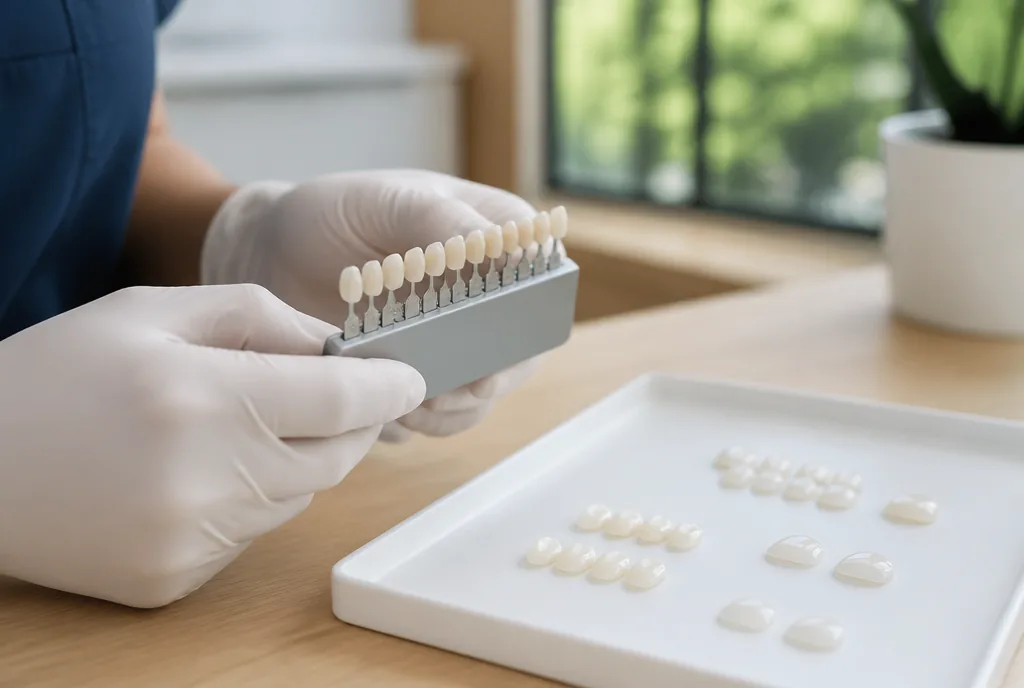
"How long do veneers last?" is usually the second question people ask, right after "what will they look like?" It is the more important of the two. Veneers are a long-term commitment rather than a treatment you try and reverse, so understanding their lifespan, and what shortens or extends it, belongs firmly at the start of the conversation rather than the end.
This guide from the team at Footscray Dental Studio sets out realistic timeframes for porcelain and composite veneers, the factors that make the biggest difference to how long they survive, how to care for them properly, and the signs that a veneer is reaching the end of its service.
Quick Overview
- Dental veneers are thin, custom-made shells bonded to the front surfaces of teeth to address aesthetic concerns.
- They suit chipped, stained or misshapen teeth, though suitability always depends on the state of your oral health at the time of assessment.
- Porcelain veneers demonstrate a significantly longer lifespan than composite, but there is real variation from patient to patient.
- Habits you might not connect with your teeth, such as grinding, nail biting and dietary choices, affect lifespan considerably.
- A thorough consultation is the appropriate first step, both to assess suitability and to choose the material that fits your situation.
What Are Dental Veneers?
Veneers are thin shells, made from either porcelain or composite resin, bonded to the front surfaces of natural teeth. Healthdirect describes them as thin layers of material placed over a tooth, which is a fair summary of both how they look and how they work.
They address cosmetic concerns rather than structural ones: chips, discolouration, stubborn surface stains and irregularities in the shape of a tooth. Where several teeth are involved and the aim is a coordinated change across the whole smile, veneers often form part of a broader smile makeover plan rather than being considered tooth by tooth.
Porcelain veneers provide a more realistic appearance and greater durability than resin alternatives, largely because porcelain reflects light in a way that closely mimics natural enamel. They are also typically more expensive, which is the trade-off that shapes most people's decision.
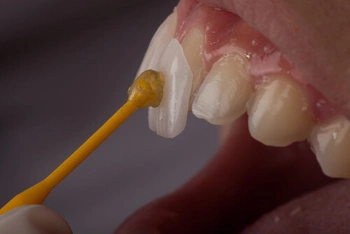
One point deserves emphasis before any of the aesthetics. Veneers are irreversible. A small amount of tooth enamel is usually removed during preparation to make room for the shell and allow it to sit flush, and enamel does not grow back. Once that has happened, the tooth requires permanent covering, whether by the original veneer or by whatever replaces it in ten or twenty years. That is not a reason to avoid veneers, but it is a genuine consideration to discuss thoroughly with your dentist before proceeding, and it is why an unhurried consultation matters so much here.
How Long Do Veneers Last?
The honest answer is that it depends on the material and on you. Here is how the two options compare.
Porcelain veneers
Porcelain is a durable ceramic that closely mimics the appearance of natural tooth enamel, both in colour and in the way it handles light. With proper care, porcelain veneers commonly last between 10 and 15 years, and some cases extend well beyond that.
Outcomes vary according to oral hygiene, the characteristics of your bite, and lifestyle factors such as diet and grinding habits. Two people can have veneers placed on the same day by the same dentist and be at very different points a decade later.
Composite veneers
Composite veneers are made from resin and are the more affordable option. They can often be applied and shaped in a single visit, which makes them appealing when time or budget is the constraint, and the same material is used in composite bonding to reshape or repair individual teeth.
The material is less durable than porcelain, and composite veneers generally require replacement after around 4 to 8 years. They are also more prone to chipping over time, particularly along the biting edges, and they pick up stains in a way porcelain does not.
The common ground
No veneer lasts indefinitely. Both types will eventually need replacing, and any claim to the contrary should be treated with scepticism. What the figures above really describe is a range, and where you land within that range depends largely on factors you can control. That is the useful part of this article, and it is what the next section covers.
What Affects How Long Veneers Last?
Teeth grinding and clenching
Bruxism applies significant force to the front teeth, night after night, and it is among the most common causes of premature wear or outright damage to veneers. If you grind or clench, a custom night mouthguard is generally recommended before veneers are placed, not after the first one fractures. Many people grind without realising it, so it is worth asking your dentist whether the wear patterns on your teeth suggest it.
Using teeth as tools
Opening packaging, biting nails and chewing hard objects such as ice or pen lids all place sharp, concentrated loads on the edges of the front teeth. Veneers tolerate ordinary chewing well and this sort of treatment poorly, and chipping or fracturing is the usual result.
Diet
Very hard foods gradually damage veneer surfaces, and the damage is cumulative rather than dramatic. Highly pigmented foods and drinks are a separate issue: coffee, tea, red wine and richly coloured sauces affect composite veneers considerably more than porcelain, because composite resin is more porous. If staining is already a concern for you, our article on the reasons teeth turn yellow explains the mechanisms at work.
Gum health
Gums recede over time, particularly where gum disease has been present. As they recede, the margin where the veneer meets the tooth becomes exposed, which affects appearance first and may eventually require the veneer to be replaced. Healthy gums are critical to the long-term appearance of veneers, and we look at the aesthetic side of this in our article on appearance issues caused by gum recession.
Oral hygiene
Veneers themselves do not decay, since neither porcelain nor composite is susceptible to bacterial acid. The tooth underneath and the gum tissue around it absolutely can. Decay forming at the margin of a veneer compromises the bond and the tooth beneath it, and it frequently means the veneer has to be replaced earlier than it otherwise would have been. This is the single most preventable cause of a shortened veneer lifespan.
Bite and jaw alignment
An uneven bite concentrates pressure on particular teeth rather than distributing it, and a veneer taking more than its share of the load will not last as long. Your dentist assesses your bite before veneers are placed, and may recommend adjustments or a different approach where the loading pattern makes veneers a poor prospect on a given tooth.
How to Care for Veneers
Veneers require the same care as natural teeth, which Better Health Channel makes clear in its general guidance on cosmetic dentistry. In practice that means:
- Brush twice daily with a soft-bristled brush, paying particular attention to the gum line where the veneer margin sits.
- Floss daily. Veneers do not remove the need to clean between the teeth, and the contact points are exactly where decay tends to start.
- Keep up regular check-ups and professional cleans, so the veneers and the teeth beneath them are monitored rather than assumed to be fine.
- Use a non-abrasive toothpaste. Highly abrasive whitening formulas dull the surface of composite veneers over time, and a dulled surface picks up stains more readily still.
- Wear a custom night guard if you grind or clench. This measure alone can significantly extend the life of a set of veneers.
Porcelain veneers resist staining from food and drink well. Composite veneers are more susceptible, and coffee, tea, red wine and certain foods will gradually shift their colour over the years. Neither material responds to whitening, which is worth planning around rather than discovering later.
Regular dental visits matter more than people expect. They allow your dentist to monitor the condition of each veneer as well as the health of the underlying tooth and gum, and early detection is what keeps a minor repair from becoming a full replacement. A small chip noticed at a routine visit can sometimes be polished or repaired. The same chip left for two years may not offer that option.
When Do Veneers Need Replacing?
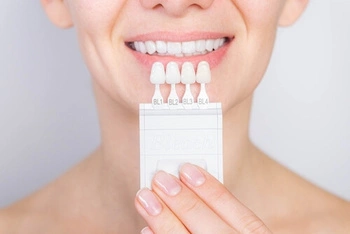
The Australian Dental Association's teeth.org.au offers helpful general information on veneers and when they need attention. The usual indicators that a veneer is reaching the end of its service are:
- Visible chips or cracks in the veneer surface
- Discolouration that does not come away with polishing
- Changes in your bite, or the veneer feeling different when you close together
- The veneer loosening or lifting at an edge
- Gum recession that has exposed the margin between veneer and tooth
Your dentist monitors these signs at routine visits and can advise on the right timing for replacement, which is often a matter of months rather than an immediate decision. Chips, fractures and a colour that no longer matches the surrounding teeth are the most common reasons replacement becomes necessary.
One longer-term consideration: each replacement cycle typically involves a little more preparation of the tooth. Where significant enamel has been lost over successive replacements, your dentist may raise crowns as an alternative, since a crown covers the whole tooth rather than just its front surface and may be the more sensible option at that point.
A Considered Approach to Veneers
Veneers are a meaningful cosmetic option for the right patient, and for many people they resolve concerns that have bothered them for years. They are also a long-term commitment that deserves careful thought beforehand, precisely because the preparation cannot be undone.
The proper starting point is a thorough consultation: an examination of the teeth and gums, an honest discussion of what veneers can and cannot achieve in your particular case, and a comparison of the alternatives. Sometimes professional teeth whitening or composite bonding achieves what someone is actually after at a fraction of the commitment, and a good consultation should surface that rather than skip past it. Where veneers are the right answer, choosing between porcelain and composite comes down to your priorities around longevity, appearance and cost.
Suitability and results always depend on an individual assessment. Footscray Dental Studio welcomes a conversation about whether porcelain veneers are appropriate for your situation, and patients from across Footscray and Melbourne's inner west are seen at our Barkly St practice.
Frequently Asked Questions
Is there a difference between porcelain and ceramic veneers?
In a dental context there is no difference. Porcelain is a type of ceramic, and the two terms are used interchangeably when describing veneers. Both are custom-made in a laboratory, fired at high temperatures and then bonded to the tooth surface, so if you are quoted for one and reading about the other, you are looking at the same thing.
Can veneers be whitened if they discolour?
Veneers cannot be lightened with standard tooth whitening treatments. Porcelain resists staining and does not absorb whitening agents, so bleaching has no effect on its colour. Composite veneers do discolour progressively, and while a professional polish during a clean may refresh their appearance, bleaching will not change their shade either. Where discolouration is significant and does not respond to polishing, replacement is usually the appropriate option, and your dentist can advise on timing.