






Most people picture rotten teeth as blackened stumps, and by the time decay looks like that, it has been building for a long time. In reality, rotting teeth send visual signals from the very beginning: a chalky white patch here, a dull spot there, a brown fleck along a groove. Knowing what to look for can save you pain, money and possibly the tooth itself. In this guide, the team at Footscray Dental Studio walks through exactly what rotten teeth look like at every stage, how they compare with healthy teeth, what the signs mean in children, and when what you see in the mirror means it is time to act.
What Are Rotten Teeth? A Quick Explanation
Rotten teeth represent the advanced stage of tooth decay, the point at which bacterial damage has significantly compromised the tooth's structure. The process starts with plaque, a sticky, bacteria-laden layer that builds up on the teeth and generates acids that erode the enamel. Over time the bacterial penetration deepens, working through layer after layer of the tooth and eventually causing infection at its core.
It helps to be precise with the terminology, because the words are often used interchangeably:
- Cavities are small holes in the enamel caused by early decay.
- Decayed teeth show visible damage but remain very treatable.
- Rotten teeth describe severe decay, with deep infection, structural breakdown and obvious deterioration.
In other words, a rotten tooth is the terminal stage of untreated decay, and it affects both how the tooth looks and how it functions. For a full explanation of the process behind the damage, see our guide to tooth decay symptoms, causes and treatment methods.
What Do Rotten Teeth Look Like? Key Visual Signs
Decay changes a tooth's appearance progressively, so what you see depends on how far the damage has advanced. It is worth checking your own teeth in good light every so often, because the mirror often reveals decay before any pain does.
Early Signs of Tooth Decay
- White, chalky patches on the enamel. These signal mineral loss and are the earliest visible indicator of decay.
- Subtle discolouration. The tooth may look dull or slightly yellow compared with its natural shade.
- Mild sensitivity. Cold drinks, sweets or acidic foods may cause a brief twinge.
The important thing about this stage is that the damage is still reversible with proper oral care and professional treatment. No drilling is required if you catch it here.
Moderate Decay Appearance
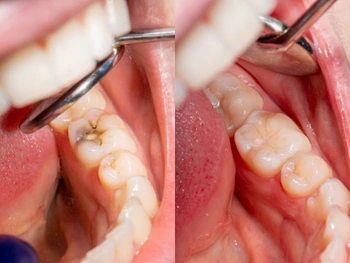
- Brown or black spots emerge on the tooth as the enamel deteriorates further.
- Visible cavities develop as small holes or pits in the surface.
- A rough texture you can feel when running your tongue over the affected teeth, with edges that become uneven or jagged.
This is the stage at which most people first recognise there is a problem. The good news is that a dental filling typically restores the tooth at this point in the progression.
Advanced Rotten Teeth
- Large darkened areas, with much of the tooth turning dark brown or black.
- Large holes or structural damage. Teeth can look broken, chipped or partially missing.
- Crumbling enamel, with parts of the tooth wearing away or collapsing.
- Signs of spreading infection, including visible gum swelling or pus around the tooth.
At this severity, urgent dental care becomes necessary. If you can see swelling or pus, or the pain is severe, contact an emergency dentist rather than waiting for a routine appointment.
Rotten Teeth vs Healthy Teeth: A Visual Comparison
Sometimes the clearest way to spot trouble is to know what healthy looks like. Compare your own teeth against both lists below, and pay attention to the gums as well as the teeth themselves, since gum changes often accompany decay.
Healthy teeth typically show:
- A bright or slightly off-white colour
- A smooth, glossy surface texture
- An even shape with no visible damage
- Pink, firm gums that do not bleed easily
Rotten teeth typically show:
- Yellow, brown or black discolouration
- A rough, pitted or sticky surface texture
- An irregular shape with chips, holes or missing sections
- Red, swollen gums that bleed during brushing
Put side by side, the contrast demonstrates just how dramatically decay alters both the appearance of the mouth and its underlying health.
One distinction is worth learning, because it saves a lot of unnecessary worry. Surface staining and decay are not the same thing. Stain from tea, coffee, red wine, curry or smoking tends to sit evenly across a broad area of the tooth, follows the shape of the surface, and feels perfectly smooth under the tongue. It usually polishes away during a professional clean. Decay behaves differently: it is localised rather than spread out, it often hides in a groove, along the gumline or at the edge of an old filling, and the surface has texture to it. A fingernail or the tip of your tongue tends to catch slightly on a decayed spot. If a dark mark on a tooth feels rough, catches floss or has grown noticeably since you last looked, treat it as decay until a dentist tells you otherwise.
What Does a Rotten Tooth Look Like in Children?
Tooth decay in children deserves its own mention, because it progresses more aggressively than in adults. Children's enamel is thinner, and dietary habits heavy in sugary food and drink accelerate the damage.
In a child's mouth, look for:
- Yellow or brown patches forming on the teeth
- Cavities that develop rapidly, sometimes within surprisingly brief timeframes
- Visible decay affecting the front teeth first
That front-teeth pattern is frequently linked to prolonged bottle feeding or sugary liquids, particularly when a child regularly falls asleep with a bottle, and the condition is sometimes called early childhood decay or bottle decay. Because young children often cannot clearly communicate discomfort, these visual signs are critically important for early detection. A toddler will rarely tell you a tooth aches, but a brown patch on a front tooth speaks for itself. If you spot any of these changes, a children's dental check-up should be the next step, and acting quickly protects not just the baby teeth but the adult teeth developing behind them. Baby teeth hold the space that permanent teeth will eventually occupy, so losing one early to decay can affect how the adult tooth comes through years later. Cost should not be the reason a child waits, either: under the Child Dental Benefits Schedule, eligible children can receive bulk-billed examinations, cleans, fluoride treatments and fillings, which makes an early look far easier to arrange than most parents expect.
Stages of Tooth Decay: From Healthy to Rotten
Every rotten tooth has travelled the same road. Decay progresses through five stages, each one looks and feels a little different, and knowing roughly where a tooth sits on the journey tells you how urgently it needs attention.
Stage 1: Demineralisation. The enamel loses minerals through acid exposure. Visually, this appears as white spots on the tooth surface.
Stage 2: Enamel decay. The enamel weakens further and small cavities form. The damage is still limited to the outer layer of the tooth.
Stage 3: Dentine decay. The decay spreads into the dentine, the softer layer beneath the enamel. Sensitivity increases and discomfort becomes far more noticeable.
Stage 4: Pulp infection. Bacteria reach the pulp, which contains the tooth's nerves and blood vessels. Severe pain and inflammation often follow.
Stage 5: Abscess and severe rot. The infection produces pus formation and swelling and can spread to the surrounding areas of the mouth. The tooth may become loose, and if it cannot be saved, extraction may need to be discussed with your dentist.
Each stage represents an escalation in severity, and treatment becomes more complex, and more costly, the further along the road a tooth travels.
Warning Signs That Indicate Severe Tooth Rot
Appearance is only part of the picture. A tooth can look merely stained on the outside while hiding significant damage within, so it pays to notice how your mouth feels and smells as well as how it looks. These accompanying signs suggest decay has reached a serious stage:
- Persistent bad breath that does not improve with brushing (our article on tooth decay smell explains why this happens)
- Continuous or throbbing tooth pain
- Sensitivity to hot or cold foods and beverages
- Swelling in the gums, jaw or face
- A bad taste in the mouth, often caused by infection
None of these signs should be ignored. Where they appear together, there is usually an underlying infection that requires immediate treatment.
What Causes Teeth to Rot?
Tooth rot rarely stems from a single factor. It is typically the result of several everyday habits and conditions working together over months and years:
- Poor oral hygiene. Infrequent brushing and flossing allow plaque to build up unchecked.
- A high-sugar diet. Sugar feeds the harmful bacteria in the mouth.
- Bacterial accumulation. As bacteria multiply, they produce the acids that attack tooth enamel.
- Dry mouth. Reduced saliva makes it harder for the mouth to neutralise acid naturally.
- Lack of dental visits. Without regular check-ups, early decay progresses unnoticed until it becomes visible rot.
It helps to understand the rhythm behind those factors. Every time you eat or drink something containing sugar, the bacteria in plaque produce acid within minutes, and the enamel loses minerals for roughly the next half hour until saliva can neutralise the acid and begin replacing what was lost. A tooth can absorb that cycle comfortably a few times a day. What it cannot absorb is a constant drip of it, which is why grazing on biscuits all afternoon or nursing a soft drink over an hour does more damage than eating the same amount in one sitting. Dry mouth compounds the problem by removing the repair half of the cycle altogether, which is why it appears so often in people taking medications that reduce saliva flow.
Understanding these causes is empowering, because every one of them can be addressed before severe decay ever develops.
Can Rotten Teeth Be Fixed?
Yes. In almost every case, rotten teeth can be treated, and the type of treatment depends on how far the decay has advanced and whether the inner structures of the tooth are involved:
- Early stage: Fluoride treatments restore lost minerals and strengthen the enamel.
- Moderate decay: Fillings repair cavities and restore the tooth's structure.
- Advanced decay: Root canal treatment removes the infected tissue from inside the tooth, and a crown is often placed afterwards to protect and rebuild what remains.
- Severe damage: When a tooth genuinely cannot be saved, dentists may recommend extraction, followed by a discussion of replacement options.
Early intervention offers the best chance of preserving the natural tooth and avoiding invasive procedures, and suitability for each option depends on an individual assessment. For a detailed walk-through of every treatment pathway, read our companion guide on how to fix rotten teeth.
When Should You See a Dentist?
Many people delay a dental visit until the pain becomes unbearable, but by that point the treatment required is almost always bigger than it needed to be. The early signs deserve attention long before then. See a dentist if you notice:
- Dark spots, holes or visible damage on any tooth
- Persistent sensitivity or discomfort
- Swollen or bleeding gums
- Any unusual change in how a tooth looks
Prompt treatment under the supervision of an experienced dentist prevents minor issues from becoming serious ones. The dentists at Footscray Dental Studio on Barkly St see patients from across Footscray and Melbourne's inner west, and an early appointment is almost always a shorter, simpler and cheaper one.
How to Prevent Tooth Decay and Rot
Prevention is both more effective and more cost-efficient than any treatment, and none of it is complicated. The essentials:
- Brush your teeth twice daily using a fluoride toothpaste
- Floss regularly to remove plaque from between the teeth
- Limit sugary and acidic foods and drinks
- Drink plenty of water to support healthy saliva production
- Schedule regular dental check-ups and professional cleans
Consistency is the key ingredient. Small daily habits, repeated over months and years, make an enormous long-term difference to whether decay ever gets the chance to take hold.
Final Takeaway
Rotten teeth are the end result of untreated decay progressing through multiple stages, and each stage comes with distinct visual signs. The warnings span everything from subtle white spots to severe discolouration and structural damage, and they usually appear long before the condition becomes critical.
Understanding what rotten teeth look like, and recognising the early signs, allows you to take timely action to protect your oral health. Regular dental care, good daily hygiene and early intervention remain the most effective ways to stop decay ever reaching its advanced stages. When it comes to your teeth, it is always better to act sooner rather than later.