






Everyone has the occasional bout of bad breath. A garlicky lunch, a strong coffee, a dry mouth first thing in the morning: these come and go and mean very little. But when an unpleasant odour keeps coming back no matter how well you brush, there is often a hidden cause, and one of the most common is tooth decay. A tooth decay smell has a distinctive character, it behaves differently from ordinary bad breath, and it will not go away until the decay itself is treated. In this guide, the team at Footscray Dental Studio explains what causes the odour, how to tell it apart from everyday halitosis, and what can be done about it, both at home and in the dental chair.
What Is Cavity Tooth Smell?
Cavity tooth smell, often referred to under the broader term halitosis, describes an unpleasant mouth odour that typically stems from tooth decay. The bad odour develops when bacteria break down food particles in the mouth while their acids attack the tooth structure. Food particles trapped between the teeth absorb proteins and sugars, and as bacteria digest them they release sulphur compounds and other by-products that create foul odours.
It is worth saying up front that bad mouth odour is not exclusively a cavity problem. An uncleaned tongue or an upset stomach can produce a similar smell, which is why self-diagnosis is unreliable. What sets decay-related halitosis apart from routine morning breath is its character and persistence: it is often described as rotten or sulphur-like, and it becomes noticeable during chewing or even ordinary breathing, not just first thing in the morning. In many cases the odour is one of the first outward signs of the damage caused by rotten teeth, appearing before any pain does.
That timing matters. Because smell often precedes pain, a persistent odour gives you a genuine head start: an opportunity to treat a small cavity before it becomes a large one.
Difference Between Early and Advanced Decay Odours
Not every decay smell is the same. The odour changes as the decay progresses through the tooth, and learning the difference between the two ends of the scale can tell you a lot about how urgent the problem is.
1. Early Decay Odour
- Noticeable mainly during flossing or brushing, when trapped debris is disturbed
- Usually mild or slightly sour in character
- Often intermittent or temporary rather than constant
- Frequently mistaken for food residue or ordinary morning breath
Because the early smell is so easy to explain away, this stage is often missed entirely. That is unfortunate, because it is exactly the stage at which treatment is simplest.
2. Advanced Decay Odour
- A strong, prolonged and persistent smell that resembles rot or sulphur
- Noticeable to you (and sometimes to others) while speaking, breathing or laughing
- Typically accompanied by tooth pain and sensitivity
An advanced decay odour is your mouth telling you that bacteria have reached the deeper layers of a tooth. It deserves prompt professional attention.
What Causes Tooth Decay Smell?
Two main mechanisms drive the odour, and they usually appear in sequence as decay progresses. The first is at work in almost every untreated cavity; the second belongs to the more serious end of the spectrum.
1. Bacterial Breakdown Inside Cavities
When food particles lodge between the teeth and remain uncleaned, bacteria gain access to the inner layers of the tooth. There they break down sugars and proteins, producing sulphur compounds and acids as by-products. Those sulphur compounds are the source of the classic rotten-egg character of decay breath. As the decay progresses and the cavity deepens, the intensity of the odour deepens with it.
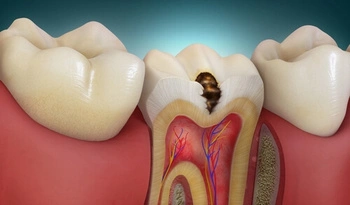
2. Tooth Infection or Abscess
When advanced decay progresses far enough to cause an abscess, the odour becomes markedly worse. As decay reaches the pulp at the centre of the tooth or the surrounding tissues, pus begins to accumulate. Abscess-related odour persists longer and is more intense than the smell of early decay, and it is usually joined by significant pain and swelling. An abscess is a genuine dental emergency, not something to monitor at home.
Does Tooth Decay Smell Bad All the Time?
Not necessarily, and not every persistent odour is decay. Intestinal and digestive issues can cause similar symptoms, though these tend to wear off over time as the underlying upset settles. Early-stage decay, meanwhile, produces such a subtle odour that many people cannot perceive it at all, and even close family may not notice anything until the decay is well advanced.
The defining feature of a true decay smell is that it tracks the decay. It intensifies as the cavity deepens, it resists brushing and mouthwash, and, importantly, once the decay is treated through dental intervention, the odour ceases because the source of the bacterial activity has been removed.
How to Treat Tooth Decay Smell
The golden rule with decay breath is simple: addressing the root cause is far more effective than any temporary masking solution. Short-term habit changes can reduce the odour, but they will not eliminate it completely, no matter how diligently you apply them. Effective treatment means eliminating the source of the bacterial activity itself, and only a dentist can do that.
1. Home Remedies
Common do-it-yourself approaches include mouthwash, chewing gum and oil pulling. All of these can temporarily refresh the mouth, and they have a legitimate place: a quick rinse or a piece of sugar-free gum before a social event or a professional meeting is perfectly sensible for brief relief when you need to feel confident in company.
The limitation is that none of them touches the underlying decay. Mouthwash rinses over the cavity without reaching the bacteria sheltering inside it, and gum simply layers a pleasant scent on top of an unpleasant one. Once the bacteria regather, and they always do, the bad odour returns. Treat home remedies as a stopgap, never a solution.
2. Dental Treatment
Professional treatment targets the decay itself, and the right option depends on how far the damage has spread. Our full guide on how to fix rotten teeth covers each pathway in detail, but in summary:
- Fillings: When the decay is in its early stages, the dentist removes the decayed portion of the tooth and restores it with a dental filling. This halts the bacterial activity, and with it the associated odour.
- Root canal treatment: When decay has reached the inner pulp, the procedure involves removing the infected inner tissue, cleaning the canal thoroughly and sealing it. Because the entire source of infection is cleared out, this addresses the origin of the bad breath rather than masking it.
- Tooth extraction: As a last resort, when a tooth is so structurally compromised that neither a filling nor canal treatment can stop the odour, dentists may recommend removing the tooth. This follows the standard extraction protocol, and your dentist can discuss replacement options afterwards.
Which option suits you depends on an individual examination, so the first step is always an assessment rather than assuming the worst.
How to Prevent Tooth Decay Smell in the Future
Once your mouth is fresh again, a few habits will keep it that way.
Maintain Consistent Oral Hygiene
Regular brushing and daily flossing remove the food particles that feed odour-producing bacteria before they can be broken down into sulphur compounds. Do not forget the tongue, which harbours its own share of bacteria, and consider a non-alcoholic mouthwash to supplement your routine without drying out the mouth. Day to day, this is your first line of defence against both decay and bad odour. If your routine has slipped lately, our article on the effects of poor oral hygiene is a useful reality check on where neglect eventually leads.
Schedule Regular Dental Check-Ups
Regular visits allow your dentist to detect the early signs of decay before they progress, and treating a cavity early stops bacterial activity before an odour ever develops. If you are particularly prone to decay, your dentist may suggest reviews as often as every two to three months until things stabilise. Professional cleaning at these visits also removes the thick plaque deposits that brushing cannot shift, and if your gums are contributing to the problem, dedicated gum disease care tackles that source too. The bigger picture: regular visits consistently prevent the complex, costly treatments that neglected decay eventually demands. A check-up and clean at our Barkly St practice is a simple, affordable place to start.
Consume a Balanced Diet
What you eat directly shapes bacterial growth in your mouth. Limit sugary and acidic food items, which feed the bacteria responsible for both decay and odour, and be especially wary of sipping sweet drinks slowly across the day, since that keeps the bacteria continuously supplied. Increase your daily water intake to around two to three litres: water helps wash away food particles throughout the day and inhibits bacterial production between brushes. It is the cheapest breath freshener there is.
Final Words
A persistent tooth decay smell is more than a social inconvenience. It is a signal that bacteria are actively breaking down a tooth, and the smell will keep pace with the damage until the source is removed. Mints and mouthwash buy you an evening; a proper diagnosis buys you your fresh breath back for good measure. The earlier you act on the signal, the simpler and less expensive the fix tends to be.
If a stubborn odour has you covering your mouth around Footscray, Yarraville or anywhere in Melbourne's inner west, the team at Footscray Dental Studio can find the cause and treat it at the source, whether that means a professional clean, a small filling or something more involved.
Frequently Asked Questions
Can tooth decay actually cause bad breath?
Yes. A persistent unpleasant smell results from bacteria breaking down food particles and tooth structure inside and around a cavity. As decay advances, those bacteria release sulphur compounds that contribute to ongoing bad breath, and the smell persists even after brushing.
What does tooth decay smell like?
Decay odour is typically foul, rotting or sulphur-like, and many people compare it to spoiled food or eggs. Unlike temporary morning breath, this smell lingers throughout the day. Its persistence is the biggest clue that a tooth, rather than last night's dinner, is responsible.
How can you tell if bad breath is from tooth decay or another cause?
Decay-related halitosis does not improve with brushing, mouthwash or chewing gum. It also tends to come with companions: tooth sensitivity, visible dark spots or pain when chewing. Only a dental examination can reliably confirm the cause, so persistent odour is worth a professional check.
Is bad breath from tooth decay a sign of an infection?
Possibly. Advanced decay allows bacteria to penetrate the inner layers of the tooth, which can create an infection or abscess. If persistent bad breath is accompanied by pain, swelling or a bad taste in the mouth, prompt professional assessment is important.
When should Australians see a dentist for ongoing bad breath?
If bad breath persists for longer than two weeks despite good oral hygiene, a dental check-up is recommended. Early assessment prevents a small problem progressing into something complex, and it supports your long-term oral health whatever the cause turns out to be.