





Australians love their sport. Whether you play footy on a Saturday morning, train at a boxing gym after work, or ride the Maribyrnong River trail before sunrise, the physical side of sport is usually well looked after. Muscles get stretched, joints get taped and physiotherapy appointments get booked. Teeth, on the other hand, are often left completely unprotected, right up until the moment something breaks.
That is a costly oversight. A study of dental trauma found that around 40 per cent of dental injuries arise from sporting activities, and the teeth involved are usually the front ones, the teeth you show every time you smile. Sports such as mixed martial arts, boxing, rugby league, field hockey and cycling place the mouth directly in harm's way, and the resulting damage does not always announce itself straight away. Some injuries hurt immediately. Others develop quietly over weeks or months, as a hairline crack deepens or a bruised nerve slowly dies.
This guide from the team at Footscray Dental Studio sets out what athletes across Footscray and Melbourne's inner west need to know: the injuries that happen most often, which sports carry the greatest risk, the protective equipment worth investing in, the daily habits that keep teeth strong through a demanding season, and exactly what to do in the minutes after a dental injury. The aim is simple. With sensible protective measures in place, you can train and compete without playing tentatively, and without the nagging fear of losing a tooth.
The Most Common Sport-Related Dental Injuries
Sporting dental trauma tends to fall into four broad groups. Knowing what each one looks like helps you respond quickly and gives you a clearer sense of what your protective gear actually needs to do.
Chipped or fractured teeth
This is the injury most players will encounter at some point. It is caused by a fall or a direct blow to the mouth, and it typically takes a small piece of tooth away during the impact. A partially broken tooth may look like a cosmetic problem, but the missing structure compromises the strength of the whole tooth, and the remaining walls become far more likely to fail under normal chewing loads.
Fractures that go untreated tend to lead to further complications over time. The exposed inner layers are more sensitive and more prone to decay, cracks can extend towards the nerve, and what began as a small chip can eventually require far more involved treatment. If you want a fuller picture of how cracks behave and why they are so easily missed, our definitive guide on cracked teeth covers the topic in detail.
Knocked-out teeth (avulsion)
An avulsed tooth, meaning a tooth knocked completely out of its socket, is the most critical form of dental trauma in sport. It happens most often in mixed martial arts, boxing, karate and cycling, where the force delivered to the face is considerable and often unexpected. Avulsion usually brings significant bleeding that needs to be controlled quickly, and the window for saving the tooth is short. What you do in the first few minutes genuinely matters, which is why the first aid steps further down this page are worth reading before you need them.
Jaw and facial trauma
A sudden forceful blow to the face or jaw can damage far more than a single tooth. Injuries of this kind frequently create bite problems, where the teeth no longer meet the way they used to, and they tend to produce persistent pain that does not settle with rest. Left unassessed, jaw and facial trauma can cause long-term complications affecting how you chew, speak and hold your jaw at rest.
Soft tissue injuries
Cuts and tears to the lips, cheeks, tongue and gums are common after partial falls and collisions, particularly when a stray elbow or a piece of equipment catches the mouth. These injuries are painful out of proportion to how they look, and because the mouth carries a heavy bacterial load, an open wound near the teeth increases the risk of infection reaching the tooth itself.
High-Risk Sports Versus Lower-Risk Sports
The probability of a dental injury varies enormously from one sport to another, and understanding where your own activity sits helps you choose the right level of protection. As a general rule, any sport involving speed, direct contact or instability of balance raises the risk of injury to the mouth.
High-risk sports
These are the codes with the highest probability of dental injury, characterised by frequent direct impact, falls and fast-moving equipment.
- Boxing and mixed martial arts. Powerful punches, elbow strikes and accidental head collisions place enormous force through the jaw and front teeth, elevating trauma risk more than almost any other activity.
- Football and rugby. Tackles, falls and direct body impacts routinely cause tooth injuries, especially in contested situations where players cannot brace.
- Field hockey. Fast-moving balls and uncontrolled stick swings are a leading cause of soft tissue injuries and facial trauma, often to players nowhere near the ball.
Moderate-risk sports
- Soccer. Head clashes when contesting the ball and accidental elbow hits raise the risk of dental injury considerably, despite soccer being considered a limited-contact code.
- Cycling. Accidents at speed create heavy dental injuries, because the face frequently takes the impact when a rider goes over the handlebars.
Low-risk sports
- Gym training. Accidentally dropped weights, bars and equipment cause dental injuries more often than most lifters expect.
- Running and hard conditioning work. Awkward postures and falls during a run can still result in trauma to the mouth.
The point worth holding onto is that even low-risk sports jeopardise dental health when no safety measures are taken at all. Risk is reduced by preparation, not by the label attached to the sport.
Protective Equipment Athletes Should Consider
How much protection you need depends on the nature of the sport, how frequently impact occurs, and the level of contact involved. Equipment varies accordingly, but two items do most of the heavy lifting.
Mouthguards
A mouthguard is the first line of defence for your teeth during sport. It works by reducing impact shock, distributing force evenly across its surface rather than allowing it to concentrate on one or two teeth. In doing so it helps prevent chipping, fracturing and knock-outs, and it cushions the soft tissues of the lips and cheeks against the teeth.
Most sports mouthguards are made from ethylene vinyl acetate or similar thermoplastic polymers. These materials absorb shock effectively while remaining lightweight and flexible, so the guard is comfortable enough to wear for a full match and can be put in or taken out within seconds.
There are two primary types: custom-made guards, moulded from an impression or digital scan of your own teeth, and pre-made guards bought off the shelf. The difference in protection between them is significant, and we have compared them closely in our article on the difference between custom and chemist or sports mouthguards. At Footscray Dental Studio we make custom-fitted mouthguards for players across Footscray, Seddon, Yarraville and West Footscray, in club colours where you would like them.
Helmets
For combat sports and cycling, a helmet protects the face and teeth from injury by absorbing the impact of direct collisions, whether from punches, falls or contact with the ground. Helmets used in mixed martial arts, boxing and cycling are built in layers: an outer hard shell, an energy-absorbing inner layer, and a comfort layer against the head. Each layer dissipates a portion of the shock before it reaches the skull and jaw, which is why a damaged or compressed helmet should never be reused.
Why Correct Fit and Timely Replacement Matter
Protective equipment only works when it fits properly. High-quality gear fails to do its job when it is ill-fitting, and this is the single most common reason athletes are injured while wearing protection. A helmet that shifts on impact and a mouthguard that sits loosely both reduce the level of safety they were bought to provide, sometimes dramatically.
Mouthguard protection also depends on regular inspection and timely replacement. Guards wear down, thin out at the biting surfaces and lose their shape over a season, particularly for younger athletes whose teeth and jaws are still changing. Any guard that is torn, perforated, distorted or no longer holding its fit should be replaced rather than pushed through another few months. Bring it along to your check-up and your dentist can tell you whether it still offers meaningful protection.
Daily Oral Care Habits for Athletes
Protective gear handles the sudden impacts. Daily habits handle everything else, and for anyone training seriously they are just as important to preserving your teeth.
Brushing and flossing
Brush daily with a fluoride toothpaste and floss between the teeth to clear what brushing cannot reach. For athletes, timing matters as much as technique. Energy drinks and sports drinks temporarily soften and weaken enamel through their acidity, so brushing immediately afterwards scrubs enamel while it is at its most vulnerable. Wait 30 to 60 minutes after consuming them before you brush. That delay gives saliva time to allow the enamel to reharden, so the brush is polishing rather than abrading.
Maintain proper hydration
Intense training frequently causes dry mouth, particularly for athletes who breathe through the mouth during exertion. Reduced saliva flow is a genuine problem for teeth, because saliva is the mouth's natural buffer and rinse, and less of it means a measurably higher risk of tooth decay. Athletes in heavy training should aim for roughly four to five litres of water across the day, adjusted to conditions and body size. Consistent hydration shields the teeth from decay complications far more effectively than most people realise.
Sports drinks and sugar
Frequent consumption of sugary and acidic drinks impairs dental health, and the frequency matters more than the quantity. Sipping a sports drink slowly across a two-hour session exposes the teeth to acid almost continuously. Where possible, choose natural energy alternatives instead, and shift the focus of your fuelling towards a natural diet built on vegetables, whole foods and quality protein such as meat or its plant equivalents. A natural diet supports long-term tooth health as well as athletic performance, and water remains the best thing to drink during training.
Night-time protection for your teeth
Competitive sport creates mental stress as well as physical load, and that stress often shows up at night as clenching and grinding of the teeth. Continuous grinding gradually causes tooth chipping, flattened biting surfaces, sensitivity and jaw discomfort, and it can undo the work of every other habit on this list.
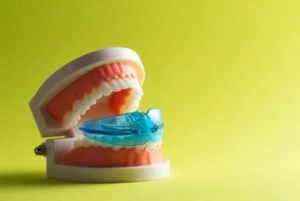
A custom-fitted night guard, made and prescribed by an Australian dentist after examining your bite, shields the teeth during sleep and absorbs the forces that would otherwise reach the enamel. It is a different appliance from a sports mouthguard, made from different material for a different purpose, so one should not be substituted for the other.
What to Do If a Dental Injury Happens During Sport
Dental injuries call for swift action, and the first few minutes often determine what can be saved. Knowing the steps in advance is worth far more than looking them up afterwards.
Immediate steps for chipped or knocked-out teeth
- Chipped teeth. Gently rinse the mouth with water to clear debris, and find and preserve any tooth fragments you can. Fragments are sometimes able to be bonded back into place, so bring them with you.
- Knocked-out teeth. Control the bleeding first by placing a clean piece of gauze or cotton on the socket and biting down with gentle, steady pressure. Handle the tooth by the crown, never the root.
- Preserve the tooth. Place a knocked-out tooth in a glass of milk, or water if milk is not available, so it does not dry out on the way to the clinic.
- Seek a dentist immediately. Time is the deciding factor here. Our emergency dental care is set up to see injured players quickly, and it is always better to be assessed and reassured than to wait and hope.
If the injury involves a suspected jaw fracture, a deep facial wound, loss of consciousness or difficulty breathing or swallowing, treat it as a medical emergency and go to a hospital emergency department.
When should athletes see a dentist?
Because injury risk varies so much between sports and between individual players, ongoing dental care is not optional for anyone competing seriously. It starts with regular visits to a dentist who understands the demands of your sport, so your teeth can be monitored over time and the advice you are given can be followed consistently rather than remembered in a crisis.
Pre-season dental check-ups
Just as you would have a physiotherapy or muscle assessment before a season begins, a pre-season dental check-up establishes where your teeth stand before the loading starts. Ahead of a boxing bout or a cycling race, your dentist examines overall dental health and looks for the things that turn a minor impact into a major injury: weakened enamel, bite problems, loose teeth, failing old restorations and untreated decay. From there you receive tailored advice designed to strengthen and protect the teeth so they can better sustain the impacts your sport delivers. Our check-up and clean appointments are a straightforward place to start.
Ongoing monitoring for contact sports
Athletes in mixed martial arts, boxing, hockey and similar contact codes benefit from continuous monitoring rather than a single annual visit. Through the season, a mouthguard can be adjusted for a better fit as it settles or as teeth shift, and a worn guard can be replaced with one that still absorbs shock properly. These timely adjustments preserve the teeth, and they also protect your endurance and momentum, since nothing interrupts a season quite like an avoidable dental injury and the appointments that follow it. Outcomes always depend on individual assessment, but athletes who keep on top of this tend to spend more of the season training and less of it recovering.
If the thought of a dental appointment is itself part of what keeps you away, you are in good company, and it is worth reading our eight easy steps to overcome dental anxiety before you book.
Protect Your Teeth and Play Hard
Dental protection is still overlooked by a great many Australian athletes, and that neglect has a real cost for both health and performance. A broken front tooth is painful, expensive and slow to resolve properly, and the disruption rarely stops at the mouth.
The flip side is genuinely encouraging. Players who pay attention to protection tend to compete with more confidence, because they are not unconsciously holding back to guard their face. That confidence is what allows an athlete to show their true potential on the field, rather than having it stifled by an accidental injury that a well-fitted mouthguard would have prevented. Protect your teeth properly, and you are free to play hard.
Frequently Asked Questions
What types of dental injuries are most common in Australian athletes?
Athletes are most prone to chipped or fractured teeth, knocked-out teeth (avulsion), jaw and facial trauma, and soft tissue injuries to the lips, cheeks and gums. The risk of each varies with the sport played and the level of physical contact involved. Any of them warrants a dental assessment, even when the damage initially looks minor.
Which sports have the highest risk of tooth injuries?
High-contact sports such as mixed martial arts, boxing, rugby, football and field hockey carry the greatest risk of dental trauma. Moderate-risk activities include soccer and cycling, where collisions and falls at speed are the usual cause. Lower-risk activities such as gym training and running still pose a risk when safety measures are ignored.
How do mouthguards protect teeth during sport?
A mouthguard absorbs and distributes the force of an impact across its surface, which reduces the risk of chipped, fractured and knocked-out teeth. It also helps protect the jaw and cushions the soft tissues of the lips and cheeks. Guards are available custom-fitted or pre-made, and which one suits you depends on your sport, your needs and an individual assessment.
Why are proper fit and timely replacement important for mouthguards?
An ill-fitting or worn-out mouthguard offers noticeably less protection, causes discomfort that tempts players to remove it, and can fail at the moment of impact. Regular checks and replacement when a guard is damaged or distorted maintain proper shock absorption and full coverage. Your dentist can assess the fit at a routine visit and advise whether it needs remaking.
What should an athlete do if a dental injury occurs during sport?
For a chipped tooth, rinse the mouth gently with water and preserve any fragments. For a knocked-out tooth, control the bleeding with gentle pressure, handle the tooth by the crown only, keep it in milk or water, and seek dental care immediately. Early intervention meaningfully increases the chance of successful treatment, though the outcome always depends on the individual injury and how quickly it is managed.