






Aching lower teeth are surprisingly common, and surprisingly confusing. Because the lower jaw is packed with nerves, pain can spread, shift and disguise its true source, leaving you wondering whether the problem is one tooth, several, or something else entirely. Some people feel a brief zing with cold water; others wake every morning with a jaw that aches from ear to ear. The good news is that lower tooth pain almost always has an identifiable cause, and most of those causes respond well to timely care. This guide from Footscray Dental Studio walks through the most likely reasons your bottom teeth hurt, how to tell dental pain from referred pain, and when to seek help.
When Lower Teeth Pain Is Trying to Tell You Something
Pain in the lower teeth can originate from several places: the tooth enamel itself, the dentine layer beneath it, the tooth roots, or the surrounding gums and bone. Because the lower jaw contains so many nerves, discomfort can feel confusing or seem to spread to other areas of the face.
The way the pain behaves offers useful clues. You might notice:
- A dull, lingering ache
- Sudden pain when biting or chewing
- Shooting pain triggered by cold air or cold foods
- Throbbing pain that worsens at night
- Sensitivity to sweet or acidic foods
- A sore jaw or tenderness along the lower jaw
Each of these patterns points towards a different set of possible causes, which is what makes describing your pain accurately so helpful at your appointment. A brief, sharp reaction to cold suggests something quite different from a deep throb that keeps you awake, so it is worth paying attention to when the pain appears, what triggers it and how long it lingers before it fades.
Common Reasons Bottom Teeth Hurt

Tooth sensitivity and enamel wear
This is the most common cause of lower teeth pain. It occurs when tooth enamel wears down, or when gum recession exposes the sensitive dentine underneath. Exposed dentine reacts sharply to temperature changes, cold foods, citrus fruits or even a gust of cold air, triggering a pain that usually fades after a short time.
Enamel erosion is typically driven by:
- Acidic foods and drinks
- Teeth grinding
- Brushing too hard or using a hard-bristled brush
- Poor oral hygiene habits
Switching to a soft brush and using a desensitising toothpaste can reduce sensitivity over time. If this sounds like you, our detailed guide to sensitive teeth covers causes and treatments more fully.
Teeth grinding and jaw strain
Grinding or clenching during sleep (bruxism) places enormous pressure on the lower teeth. Over time it wears the enamel, tires the jaw muscles and leaves the lower teeth aching. Signs that grinding may be behind your pain include:
- Teeth that hurt when you wake up
- A dull ache in the lower jaw
- Changes to your bite that feel uneven
- Cracked or broken teeth
- Sensitivity caused by enamel wear
Stress, anxiety and disturbed sleep are common triggers for grinding, and because it happens while you sleep, many people have no idea they do it until a partner mentions the noise or a dentist spots the wear. Addressing it early, for example with a custom night guard, helps prevent long-term damage to your teeth.
Gum disease and gum recession
Gum problems are another frequent reason bottom teeth hurt. In the early stages you may only notice mild tenderness or a little bleeding when brushing. As gum disease progresses, the gums can recede and expose the tooth roots, and because exposed roots lack a protective enamel layer, they react strongly to cold foods and temperature shifts.
Watch for:
- Swollen or tender gums, or swelling around the lower teeth
- Bad breath that does not improve
- A bad taste in the mouth
- Loose teeth in advanced stages
The lower front teeth are particularly prone to gum problems because tartar tends to accumulate behind them, close to the salivary glands under the tongue. Good oral hygiene and early professional care reduce sensitivity and prevent ongoing discomfort, which is one reason regular check-ups and cleans matter so much. A professional clean removes the hardened tartar that home brushing cannot shift, giving inflamed gums the chance to settle.
Tooth decay and cavities
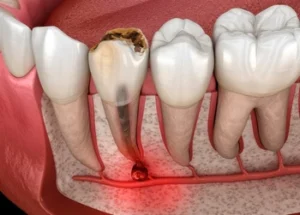
Decay develops when bacteria in the mouth feed on sugars and produce acids that damage tooth enamel. Cavities in the lower teeth usually begin with mild sensitivity, then progress to sharp or throbbing pain as the decay deepens towards the nerve. Because the early stage is so quiet, decay is often well advanced by the time it hurts. Common symptoms include:
- Pain when chewing
- Sudden pain with no obvious trigger
- Sensitivity to sweet or acidic foods
- Visible holes or dark spots on a tooth
- Pain that seems to affect multiple teeth
If decay reaches the pulp at the centre of the tooth, it damages the nerve tissue and can lead to severe pain that requires root canal therapy. (And no, despite what circulates online, there is no shortcut that kills the nerve at home; we unpack that myth in is it possible to kill the tooth pain nerve in 3 seconds.)
Cracked or broken teeth
Cracks are notoriously difficult to detect. A chipped, cracked or broken lower tooth may only hurt when you bite down, when you release the pressure, or when you eat something cold. You might experience:
- Sharp pain that comes and goes
- Sudden pain when chewing
- Sensitivity without any visible damage
- Shooting pain in the lower jaw
Cracks also give bacteria a pathway to the deeper layers of the tooth, increasing the risk of infection and abscess formation, so they are worth investigating even when the pain is intermittent. Because a hairline crack rarely shows up on a casual glance, dentists often use bite tests, magnification and X-rays to track one down.
Dental abscess and infection
An abscess is a bacterial infection that forms at the tooth root or between the tooth and gum. It is a serious dental issue that needs prompt care. Signs include:
- Severe or throbbing pain
- Swelling in the jaw or gums
- Fever or a general feeling of being unwell
- Bad breath or a persistent bad taste
- Sensitivity to pressure
Left untreated, the infection can spread and cause serious dental problems well beyond the tooth where it started. Depending on the severity, root canal treatment or removal of the tooth may be required, which is why early assessment is so important. An abscess does not resolve on its own, and painkillers only mask it, so treat these symptoms as a prompt to be seen quickly rather than something to ride out.
Wisdom teeth pressure and eruption
Wisdom teeth often cause pain in the lower teeth, particularly when there is not enough space for them to erupt properly. Impacted wisdom teeth press against their neighbours, causing pain and inflammation that can be felt well beyond the back of the mouth. Symptoms include:
- Pain in the back teeth
- A sore or stiff jaw
- Swelling around the lower jaw
- Difficulty opening the mouth
- Referred pain in nearby teeth
Because wisdom teeth typically emerge in the late teens and twenties, lower jaw pain in this age group deserves a closer look. An early assessment, usually with an X-ray to see how the teeth are positioned, helps prevent complications and clarifies whether anything needs to be done at all. Plenty of wisdom teeth cause a little discomfort as they come through and then settle without any intervention.
When Pain Feels Like It Comes From Somewhere Else
Not all lower tooth pain starts in the teeth themselves. Sometimes discomfort is referred from nearby areas, so it feels as though your bottom teeth hurt when the real source lies elsewhere in the face or jaw. Referred pain can be frustrating because the teeth themselves look perfectly healthy on examination. Noticing the pattern of your pain, when it appears, what else accompanies it and whether it moves around, helps distinguish genuine dental issues from referred pain and guides the right treatment approach.
Sinus infections and referred pain
Sometimes lower teeth pain is not caused by a dental issue at all. Sinus infections create pressure that radiates into the upper back teeth and can occasionally cause referred pain in the lower teeth as well. Two clues point towards a sinus cause: the pain often worsens when you bend forward, and it usually arrives alongside nasal congestion or facial pressure. If the ache lifts as the sinus infection clears, the teeth were probably never the problem, though a check-up settles the question.
Bite problems and TMJ disorders
An uneven bite places extra pressure on certain lower teeth, which over time leads to pain and sensitivity. Disorders of the jaw joint (TMJ) can also make the lower teeth hurt. Common signs include:
- Sore jaw muscles
- Clicking or popping sounds when opening the mouth
- Difficulty chewing
- Headaches or facial pain
Identifying bite and jaw issues early protects your teeth from unevenly distributed chewing forces before they cause lasting wear or cracks. Your dentist can assess how your teeth meet, check the jaw joint, and discuss the appropriate next steps for your situation.
Warning Signs That Need Prompt Attention
Seek dental care promptly if you experience:
- Severe pain that is not improving
- Sudden sensitivity that is worsening quickly
- Swelling in the gums or jaw
- Loose or shifting teeth
- Persistent bad breath together with pain
- Shooting pain or sharp pain when biting
These symptoms may indicate damaged nerve tissue, a bacterial infection or an advanced dental problem that responds best to early treatment. Waiting rarely improves any of them, and in the case of infection, waiting can allow the problem to spread into the jaw and surrounding tissues. If the pain is severe or accompanied by swelling, contact our emergency dentistry team; we keep appointments available for urgent cases from across Footscray and the inner west, including Seddon, Yarraville and West Footscray. For ways to stay comfortable until you are seen, our tooth pain relief guide covers safe short-term measures.
How Dental Treatment Helps Relieve Lower Tooth Pain
The right treatment depends entirely on the cause of the pain. Depending on what an examination reveals, options may include:
- Desensitising toothpaste to calm exposed, sensitive dentine
- Dental bonding to cover and protect exposed dentine
- Professional care for gum disease and gum recession
- Root canal therapy where the pulp is infected or damaged
- Repair of cracked or broken teeth
- Management of teeth grinding, such as a custom-fitted night guard, and assessment of any jaw joint concerns
Your dentist will assess the lower teeth, the tooth roots and the surrounding structures, often with the help of X-rays, to determine the best approach for your situation. Sometimes the answer is a single simple procedure; sometimes it is a combination, such as treating gum disease while also addressing the grinding that is accelerating the wear. As with all dental care, suitability and outcomes depend on an individual assessment.
Protecting Your Lower Teeth Going Forward
Good oral hygiene plays a major role in preventing tooth pain from returning. A few simple daily habits go a long way:
- Brush gently with a soft-bristled toothbrush
- Use a fluoride toothpaste, ideally one designed for sensitive teeth if that is a concern
- Limit acidic foods and citrus fruits
- Address teeth grinding early rather than waiting for damage
- Attend regular dental check-ups and professional cleans so small problems are caught and treated before they ever start to hurt
None of these habits is complicated, but together they protect the enamel and gum tissue that keep the lower teeth comfortable. Early treatment reduces the risk of serious discomfort later and supports your long-term dental health, and regular visits mean the problems described in this guide are usually caught at the mild-tenderness stage rather than the sleepless-night stage.
A Takeaway on Bottom Teeth Pain
Asking why your bottom teeth hurt is an important first step towards protecting your smile. Tooth pain, whether mild or severe, is never something to ignore, but understanding the possible causes lets you respond with confidence rather than worry, and helps you give your dentist the details that speed up an accurate diagnosis.
From enamel erosion and sensitive teeth through to gum disease, tooth decay and abscess concerns, lower teeth pain usually improves with timely care, and the earlier the cause is found, the simpler the treatment tends to be. With early treatment and professional guidance, most dental issues can be managed effectively. Listen to your body, keep up good oral hygiene, and seek professional advice when something feels off; that combination keeps your teeth strong, comfortable and healthy for years to come.