


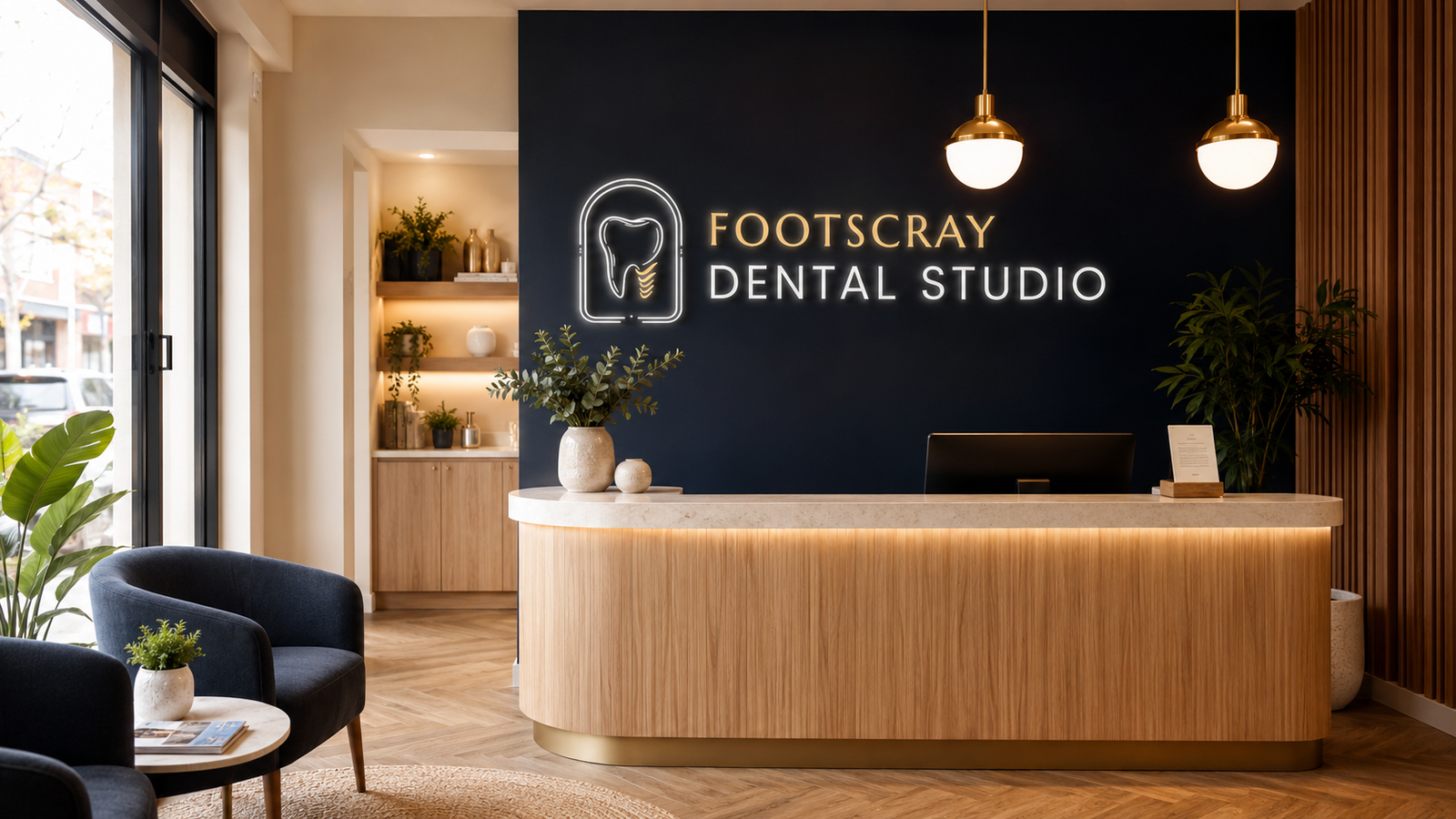



Dental fees in Australia are not standardised, which is why asking what a clean costs usually produces a frustratingly vague answer. Prices vary between states, between suburbs, and between clinics on the same street. This guide sets out the typical national ranges you can expect in 2026, explains what those appointments actually include, and shows what pushes a fee up or down. It also explains exactly what Footscray Dental Studio charges new patients, so you know where you stand before you pick up the phone.
What Is Professional Dental Cleaning?
A professional dental clean removes plaque, tartar and surface staining from your teeth using instruments and techniques that are not available to you at home. It is carried out by a dentist or hygienist with equipment designed for the job.
The reason it exists is simple: brushing and flossing, however diligent, cannot remove everything. Once soft plaque hardens into tartar it bonds to the tooth surface, and no amount of home care will shift it. Our guide to dental plaque explains that hardening process in more detail.
A clean is generally recommended when regular brushing and flossing are no longer keeping up, which for most people happens gradually rather than all at once. Deposits accumulate in the same few awkward spots, month after month, until they are beyond the reach of a toothbrush.
The benefits run beyond a cleaner-feeling mouth. A professional clean improves gum health, and the examination that accompanies it allows early detection of gum disease and tooth decay, at the stage where both are far simpler and far cheaper to treat. That early detection is arguably worth more than the clean itself, because it is what keeps small problems from quietly becoming expensive ones.
What Is Included in a Typical Dental Cleaning Appointment?
Appointments are not identical between clinics, which is a large part of why quoted prices differ so much. A standard appointment generally includes the following four components.
1. Examination and Oral Assessment
The visit begins with an assessment of your teeth, gums and the surrounding soft tissues. Your dentist looks for inflammation, gum recession, areas of potential decay, and the thickness and distribution of plaque and tartar.
This is not a formality. The findings determine how the rest of the appointment will run, how much time the clean is likely to take, and whether anything else needs attention. A mouth with light deposits and healthy gums needs a very different appointment from one with heavy build up below the gumline.
2. Scaling
Scaling removes hardened plaque, or tartar, from the tooth surfaces and along the gumline. Depending on the clinic and the case, this may be done with hand instruments, an ultrasonic scaler, or a combination of both.
Scaling is the part of the appointment that home care genuinely cannot replicate. Tartar cannot be removed by brushing or flossing at any level of effort, and removing it allows the gum tissue to settle and reattach.
3. Polishing
After scaling, a polishing paste is applied to the teeth and distributed with a slowly rotating rubber cup or brush. Polishing lifts surface stains from tea, coffee, red wine and tobacco, and leaves the enamel smoother, which makes it marginally harder for new plaque to take hold.
4. Fluoride Treatment
A fluoride application is often the final step. Fluoride helps strengthen the enamel surface and reduces the risk of future decay, which is why it is included as standard in many preventive appointments.
Average Scale and Clean Cost in Australia
The figures below are typical Australian market ranges drawn from published fee surveys and industry reporting. They are general information about what clinics around the country charge, and they are not Footscray Dental Studio's fees. Our own new patient pricing is set out further down.
Typical National Price Range
Across Australia in 2026, a routine scale and clean generally falls between AUD $150 and $300. Where a check-up, clean and fluoride application are combined into a single preventive appointment, the typical range sits at roughly AUD $160 to $309.
The spread is wide because three variables move at once: where the clinic is located, how complex the treatment turns out to be, and whether you are a new or an existing patient.
Costs for First-Time Versus Routine Patients
First-time patients typically pay more than returning ones, usually somewhere in the range of $200 to $350 or more. That is not a surcharge for being new. A first appointment includes a thorough baseline assessment that a maintenance visit does not need to repeat, including diagnostic imaging and a full record of your oral health.
Routine or recall patients generally pay in the $150 to $300 range. These appointments are maintenance-focused, take less chair time, and involve fewer diagnostics because the baseline records already exist.
What Is Included in a First Visit
A typical first visit at an Australian practice covers:
- A full oral examination
- A review of your medical and dental history
- Diagnostic X-rays
- An assessment of gum health
- An initial clean
An Overview of Check-Up and Cleaning Costs
Putting the typical national ranges together:
- Routine scale and clean: $150 to $300, generally every six to twelve months
- Check-up, clean and fluoride: $160 to $309, the standard preventive appointment
- New patient cleaning: $200 to $350 or more, for a first visit or after a long gap between appointments
- Periodontal or deep cleaning: $250 to $600 or more, where gum disease or significant build up is present
Again, these are national market ranges rather than a quote from any particular practice.
What Footscray Dental Studio Charges New Patients
We prefer to be direct about this, because uncertainty about cost is one of the most common reasons people put off a dental visit.
Footscray Dental Studio offers a New Patient Exam and Clean for $135. That single fee includes:
- A comprehensive examination
- Clinical photos
- An intraoral digital scan
- Intraoral X-rays
- A full mouth scale and clean
- A fluoride application
- A personalised treatment plan
That is the complete first appointment, with nothing held back as an extra line item. You can see the current details on our special offers page, and our check-ups and cleans page explains what the appointment involves from start to finish.
If treatment beyond that appointment turns out to be needed, it will be discussed with you and costed before anything proceeds. Children may also be eligible for bulk-billed care under the Child Dental Benefits Schedule, which is worth asking about when you book.
Factors That Influence Dental Cleaning Costs
Understanding what moves the price helps you interpret a quote rather than simply compare numbers.
1. Location and City Pricing Differences
Metropolitan clinics in prime locations often charge $100 to $150 more than the national average for equivalent treatment. The reasons are structural rather than clinical: commercial rent, staffing costs and equipment expenses are all higher in city centres, and those costs are reflected in fees.
Suburban practices generally operate with lower overheads and can price accordingly. This is one of the quiet advantages of finding good care close to home rather than in the CBD, and it is part of why patients from Seddon, Yarraville, Kingsville and West Footscray tend to look locally first.
2. Level of Plaque and Gum Disease
The condition of your mouth on the day has a direct effect on the fee. Hard, extensive tartar deposits require significantly more time and effort to remove safely than light build up.
A routine clean and polish on healthy gums costs less than a complex case involving deposits below the gumline and inflamed tissue. Where gum disease is established, the appropriate treatment is periodontal rather than routine cleaning, and it is priced differently because it is a different procedure. If cleaning has lapsed for a while, our article on poor oral hygiene explains what tends to happen in the meantime.
3. The Dentist's Experience and Clinic Technology
More experienced clinicians often charge premium rates, reflecting their training and the complexity of cases they are equipped to handle.
Advanced equipment also affects pricing. It increases a clinic's costs, but it can improve both the accuracy of diagnosis and patient comfort during treatment. Equipment commonly found in well-appointed Australian practices includes:
- Ultrasonic scaling devices
- Digital imaging and intraoral scanning systems
- Advanced infection control systems
- Air polishing technology
This equipment is expensive to purchase, energy-intensive to run, and requires a high level of expertise to use well. Those costs are part of what a fee reflects, which is worth remembering when comparing two very different quotes.
Tips to Reduce Dental Cleaning Costs in Australia
Preventive care is one of the few areas of healthcare where spending a little regularly reliably costs less than spending nothing for years. These seven strategies genuinely help.
1. Use Your Private Health Insurance Benefits
Many extras policies cover preventive dental, and most reset annually. If you have benefits sitting unused as the year winds down, a preventive appointment is one of the most sensible ways to use them. Check your annual limits and what your policy covers before booking so there are no surprises.
2. Attend Regular Maintenance Visits
Routine cleans are consistently cheaper than the treatment required after a long gap. Preventive care catches small problems while they are still small, and a filling costs a fraction of what a crown or root canal costs. The financial logic here is not subtle.
3. Maintain Strong Daily Oral Hygiene
Brush twice daily, floss every day, and use the products your dentist recommends for your particular mouth. Minimising plaque build up between appointments means shorter, simpler cleans, and fewer problems needing treatment in the first place.
4. Ask What the Appointment Includes
Before booking, confirm whether the quoted fee covers examination, scaling, polishing, fluoride and X-rays, or whether some of those are charged separately. A low headline price that excludes half the appointment is not a saving. Asking this one question prevents most unexpected bills.
5. Look for Preventive Care Packages
Many practices bundle a check-up and clean into a single package priced below the sum of its parts. Our $135 New Patient Exam and Clean is an example of this approach. Bundled preventive appointments often represent better value than the same services itemised individually.
6. Schedule Appointments Early
Minor build up addressed early means a shorter appointment and a lower fee. Waiting until deposits are heavy means more chair time, more instruments, and a higher cost. Booking before you notice a problem is the cheapest version of dental care there is.
7. Compare Clinics on Value, Not Price Alone
Lower fees sometimes reflect a narrower appointment that excludes essentials you will end up paying for anyway. Look for clinics that explain clearly what is included and what anything additional would cost. Transparency about scope and pricing is a better signal of value than the headline number.
Making Dental Cleaning Affordable and Routine
For anyone in Footscray or the surrounding inner west weighing up the cost of a clean, the honest answer is that regular preventive care is almost always the least expensive path over time. Skipping appointments does not avoid cost, it defers it, usually into a larger and more complicated form.
Footscray Dental Studio is on Barkly Street, and our focus is on unhurried, clearly explained care with pricing you can see before you commit. Suitability for any particular treatment depends on an individual clinical assessment, and we will always talk through what we have found and what the options are before proceeding.
If cost is not the only thing holding you back, you are in good company. Nervousness about dental visits is extremely common, and our guide with eight easy steps to overcome dental anxiety before visiting a dentist offers practical ways to make the appointment feel more manageable.
Frequently Asked Questions
How long after a clean can I eat?
If no fluoride was applied, you can generally eat straight after a standard clean. Where a fluoride treatment has been applied, waiting around 30 minutes allows it to be fully absorbed. For the first few hours it also helps to avoid very hot, highly acidic or strongly coloured foods and drinks, which reduces the chance of sensitivity and staining.
Can teeth cleaning prevent gum disease?
Professional cleaning removes plaque and tartar that regular brushing and flossing cannot eliminate, and those deposits are the major cause of gum inflammation. Regular cleans also give your dentist the opportunity to detect early gum problems before they progress to more serious periodontitis. Results vary between individuals, so the right frequency for you depends on your own gum health.
Is dental cleaning covered by private health insurance?
Many Australian extras policies include preventive dental cover, which typically encompasses a scale and clean. Coverage levels vary considerably between policies and insurers. Depending on your annual limits and your provider's terms, you may still have a gap payment, so it is worth checking the specifics of your policy before your appointment.
What is the difference between a regular clean and a deep clean?
A regular clean removes plaque and tartar from the tooth surfaces and along the gumline. A deep clean, also called periodontal treatment, is recommended when gum disease is present and involves cleaning below the gumline where deposits have collected in the pockets around the teeth. Deep cleaning takes considerably more time and is priced accordingly.
How often should you get your teeth professionally cleaned?
Most dentists recommend a professional clean every six to twelve months. The right interval depends on your individual risk factors, including gum health, smoking status, whether you wear orthodontic appliances, and any relevant medical conditions. The Australian Dental Association emphasises personalised preventive care based on clinical assessment rather than a single fixed schedule for everyone.