





Gum recession is one of those problems that develops so gradually most people only notice it once it is well underway. A tooth starts looking a little longer than its neighbours, or a cold drink produces a sharp jolt where it never used to, and suddenly the gum line becomes something you pay attention to. This guide from Footscray Dental Studio covers gum line recession in full: what it is, how to spot it, what causes it, how dentists diagnose it, the treatments available in Australia, the home measures that genuinely help and how to stop it progressing.
What Is Gum Recession?
Gum recession is the process by which gum tissue pulls back from the teeth, exposing portions of the tooth that would normally be covered. It happens in one of two ways: either the tooth becomes dislodged from the gum line, or the gum tissue itself wears away from the tooth surface.
Where the recession is severe, the roots of the teeth become exposed. That creates both a dental problem, because root surfaces are softer and more vulnerable than enamel, and an aesthetic one, because exposed roots look noticeably different from the rest of the tooth.
In the early stages there are typically no specific symptoms beyond visible roots or an elongated appearance to the teeth, which is exactly why it goes unnoticed for so long. It affects a fair number of Australian adults, and the proportion climbs considerably in older age groups.
Symptoms of Gingival Recession
At the incipient stage there are often no symptoms at all. As recession advances, several warning signs appear.
Teeth that look longer
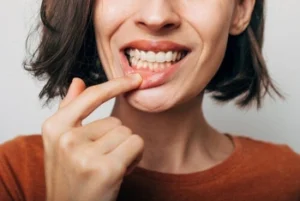
When the gum line recedes, the teeth begin to appear longer than usual. This sign requires close inspection to catch and is most easily observed while brushing in front of a mirror. Without deliberately looking for it, it is very easy to miss, particularly because the change happens so slowly that your eye adjusts to it.
Visible tooth roots
As the gums pull back, the deeper roots of the teeth become uncovered. Root surfaces present with a darker or deep yellow colouring, more intense than the enamel above them, so the increased visibility tends to make them more noticeable than the crown portion of the tooth.
An uneven gum line
A healthy gum line is even and uniform across the teeth. Recession causes that uniformity to be lost through gradual wear. The unevenness becomes progressively more prominent and often spreads across several teeth rather than affecting just one.
Tooth sensitivity
Shrinking gums expose the delicate root portion of the tooth, which has no protective enamel covering. Hot or cold foods and drinks then trigger sharp pain or lingering discomfort. A hot soup, a morning coffee or an iced drink coming into contact with an exposed root can all produce that response. If sensitivity is your main complaint, our guide to sensitive teeth covers the topic in more depth.
One important caveat: symptoms alone do not confirm gum recession. Several conditions produce similar signs, so a dentist's examination is what determines the exact cause.
Common Causes of Gum Tissue Loss
Gum erosion rarely stems from a single cause. In most patients it is a combination of biological factors, lifestyle habits and gaps in oral hygiene working together over a long period.
Periodontal disease
Periodontal disease is a chronic inflammatory condition that affects the gums and the structures supporting the teeth. It fosters the accumulation of plaque and bacteria along the gum line, and when those deposits stay in place over an extended period they trigger inflammation that leads directly to recession. It is the single most influential cause of gum tissue loss. Our gum disease care service is aimed squarely at getting this under control before it takes more tissue.
Incorrect brushing technique
Brushing too hard, often in the belief that more pressure produces a cleaner, shinier result, is a surprisingly common cause. Hard-bristle brushes accelerate the rate of recession. So does the wrong brushing angle: horizontal scrubbing with pressure gradually wears away the gum margin, particularly on the outer surfaces of the canines and premolars, where the gum tissue is naturally thinner.
Teeth grinding and bite issues
Bruxism, meaning grinding the teeth (usually at night), contributes to gum loss. The grinding exerts sustained pressure on the teeth and the gums around them, causing erosion over time. Because the forces involved are chronic rather than sudden, recession caused by bruxism takes a long while to show visible signs, which means it is often well established before anyone connects the two.
Lifestyle factors
A reckless lifestyle, marked in particular by uncontrolled consumption of sugary foods, is a leading contributor. Smoking is another: it reduces blood flow to the gum area, which weakens the tissue and leaves it more susceptible to recession. Inadequate oral hygiene, meaning a lack of consistent brushing and flossing, compromises gum health and degrades into erosion over time. Our companion article on preventing gum recession through daily habits goes into the practical side of this in more detail.
Genetics and thin gum tissue
Some people simply have thinner gum tissue, and that can be hereditary in the same way as hair colour or skin tone. If your gums wear away despite genuinely good oral hygiene, naturally thin gum tissue is a likely explanation. Grandparents can pass thin gums down through generations, which is why recession sometimes runs in families regardless of how carefully everyone brushes.
The Relative Impact of Each Factor
Not all causes carry equal weight. Rated on a scale where five represents the strongest influence:
- Periodontal disease: impact strength 5
- Incorrect brushing technique: impact strength 4
- Poor lifestyle, including smoking and a high-sugar diet: impact strength 4
- Teeth grinding (bruxism): impact strength 3
- Genetics and thin gum tissue: impact strength 3
The ranking is useful because it tells you where effort pays off most. Controlling gum disease and correcting how you brush address the two heaviest contributors, and both are entirely within reach.
Can Gum Recession Grow Back?
No. Receded gums do not grow back on their own. Lost gum tissue and the supporting structures beneath it cannot regrow without clinical intervention.
That is not the same as saying recession is untreatable or that its impact cannot be reversed. Several dentist-recommended treatments can halt the spread, manage the discomfort and protect the exposed root surfaces. Our article on whether gum recession is reversible explores the nuances of that question, including what happens when tooth position is part of the picture.
How Is Gum Recession Diagnosed by Dentists in Australia?
Clinical examination
Visual inspection is the first-line technique. The dentist pinpoints the teeth where the gum line has moved away from its normal course, evaluates the visible signs including exposed roots and inflammation, and assesses both the extent of the recession and the likely underlying cause.
Gum measurement
Using specialised instruments, the dentist takes precise measurements around each tooth. These record the depth of the gum pocket, the position of the gum margin and the level of attachment to the tooth. The purpose is to quantify the severity of the recession and to map the pattern across the whole mouth, which often reveals more than looking at one problem tooth.
Dental X-rays
X-rays evaluate the bone levels underneath, which support the teeth. They determine whether the recession is linked with bone loss, and they can indicate the presence of current or past periodontal disease. Since bone loss is invisible clinically, this step frequently changes the treatment plan.
Treatment recommendations follow from the outcomes of this examination rather than from the symptoms alone.
Gum Recession Treatment Options in Australia
Non-surgical treatment
For mild or early-stage recession, conservative measures are usually enough to stop things worsening.
- Improved oral hygiene. Gentle brushing with a soft-bristled toothbrush, using the correct technique, is the foundation. It will not restore lost tissue, but it reliably prevents further loss.
- Desensitising toothpaste. Products such as Sensodyne Rapid Relief and Dentaid Desensin Plus are formulated to reduce the tooth sensitivity that comes with gingival recession.
- Professional cleaning. Dentist-supervised removal of plaque and calculus, above and below the gum line, prevents the condition worsening and halts the progression of disease. Regular check-ups and cleans are the mainstay of managing recession over the long term.
Treating the underlying cause
- Periodontal therapy. Where gum disease is present, the dentist initiates therapy to control the infection and the inflammation driving it. Without this step, any other treatment is working against a moving target.
- Night guards for grinding. For patients who grind, a dentist-recommended mouthguard worn overnight reduces the excessive forces being applied to the teeth and gums.
Gum grafting surgery
For advanced-stage gum tissue loss, a dentist or periodontist may recommend gum grafting surgery. It is generally considered when there is prolonged sensitivity, significantly uncovered roots or aesthetic concerns that conservative treatment cannot address.
In the procedure, healthy gum tissue is taken from another area of the mouth and placed over the receded portion. The graft heals and strengthens over time, forming a stable gum line that protects the teeth. Cost varies according to the nature of the treatment, the extent of the erosion, the locality of the clinic and the experience of the practitioner. As with any surgical procedure, suitability and results depend on an individual assessment, and it is a conversation to have with the practitioner who would carry it out.
Home Remedies for Gum Recession
Home measures do not restore lost tissue. What they can do is manage symptoms and reduce the bacterial load while you address the underlying cause professionally.
Warm salt water rinse
Rinsing the mouth two to three times a day with warm salt water may palliate gum pain and cuts down the pool of bacteria around the gums. Dissolve about half a teaspoon of salt in a cup of warm water, swish gently and spit it out rather than swallowing.
Desensitising toothpaste
Toothpastes formulated for sensitivity reduce the discomfort caused by exposed tooth roots. They typically take a couple of weeks of consistent use before the full effect is noticeable, so it is worth persisting rather than switching products after a few days.
Antibacterial mouthwash
An antibacterial rinse helps control plaque accumulation around the gum line and is particularly useful in the hard-to-clean areas between and behind the teeth. For a fuller discussion of what helps at home and what does not, see our article on natural treatments for gum recession.
How to Prevent Gum Recession
Prevention preempts cure. Proper oral hygiene and a handful of sensible precautions can prevent erosion starting, or halt it worsening where it has already begun.
Use the correct brushing technique
Hold the toothbrush at a 45-degree angle towards the gum line. Avoid scrubbing horizontally along the gum line and avoid applying heavy pressure. A soft-bristle brush, or an electric toothbrush used gently, cleans the gum margin thoroughly without damaging it. Most electric brushes now include a pressure sensor, which is a genuinely useful feature for anyone who brushes too hard out of habit.
Schedule regular dental check-ups
Routine examinations catch subtle changes in the gums at an early stage, when non-surgical treatment is still effective and before the situation progresses. Six-monthly visits suit most people, while patients with a history of periodontal disease are often advised to come in every three to four months so that the gums can be monitored more closely. Your dentist will recommend an interval based on your own risk. General guidance on looking after your gums is also available from the Better Health Channel.
Adopt a proactive approach
Stay mindful of small structural changes around the teeth and gums, and of any new sensitivity triggers. Examine your gum line with a mirror after brushing and note whether any teeth are starting to look abnormally long. Signs of that kind indicate a compromised gum margin, which is the moment to arrange care rather than wait and see. Patients across Footscray, Seddon and West Footscray see us at our Barkly St practice for exactly this sort of early check.
Final Words
Gum recession is gradual, largely painless in its early stages and entirely manageable when it is caught before it becomes advanced. The tissue you have already lost will not return by itself, but the progression can be stopped, the sensitivity can be managed and the underlying cause can be treated. Results and suitability for any treatment depend on an individual assessment, so the most useful step is having the gum line looked at properly rather than guessing from the mirror.
Frequently Asked Questions
How do you fix gum recession?
Treatment depends on the underlying cause and how far the recession has progressed. Early stages often respond well to professional deep cleaning combined with improved oral hygiene, which halts further progression. Advanced recession may require procedures such as gum grafting or regenerative treatment to restore lost tissue. A dental assessment is what determines the most appropriate approach for your situation.
What causes gum recession?
The most common cause is periodontal disease, where bacterial plaque triggers chronic inflammation and the breakdown of gum tissue. Aggressive brushing, teeth grinding and inadequate oral hygiene also wear down the gum margin over time. Smoking and genetic factors such as naturally thin gum tissue increase susceptibility further.
Can gum recession grow back?
No, receded gums do not grow back on their own. Early intervention can prevent the recession worsening, but restoring the gum margin and covering exposed roots requires a procedure such as gum grafting, which a dentist or periodontist would assess and perform.
How do you reverse gum recession?
Gum recession cannot be reversed naturally once the tissue has been lost. Early treatment through professional cleaning and improved oral care stops further progression, which is often all that is needed. Moderate to severe cases may require procedures such as gum grafting to restore the lost tissue and protect the exposed roots.
What foods should I avoid if I have gum recession?
Avoid sugary and acidic foods, which encourage plaque buildup and irritate exposed root surfaces. Hard, crunchy or sticky foods tend to aggravate sensitive areas of the gums. Spicy foods can worsen inflammation where the gums are already irritated. Softer, nutrient-rich foods minimise discomfort while supporting gum health.